Clients leave knowing what happened and what to do next.
Every visit can end with paper an owner can actually follow: what was found, which medicine to give and when, and when to come back. VetOS fills it in from the chart.
Paper they can follow at home.
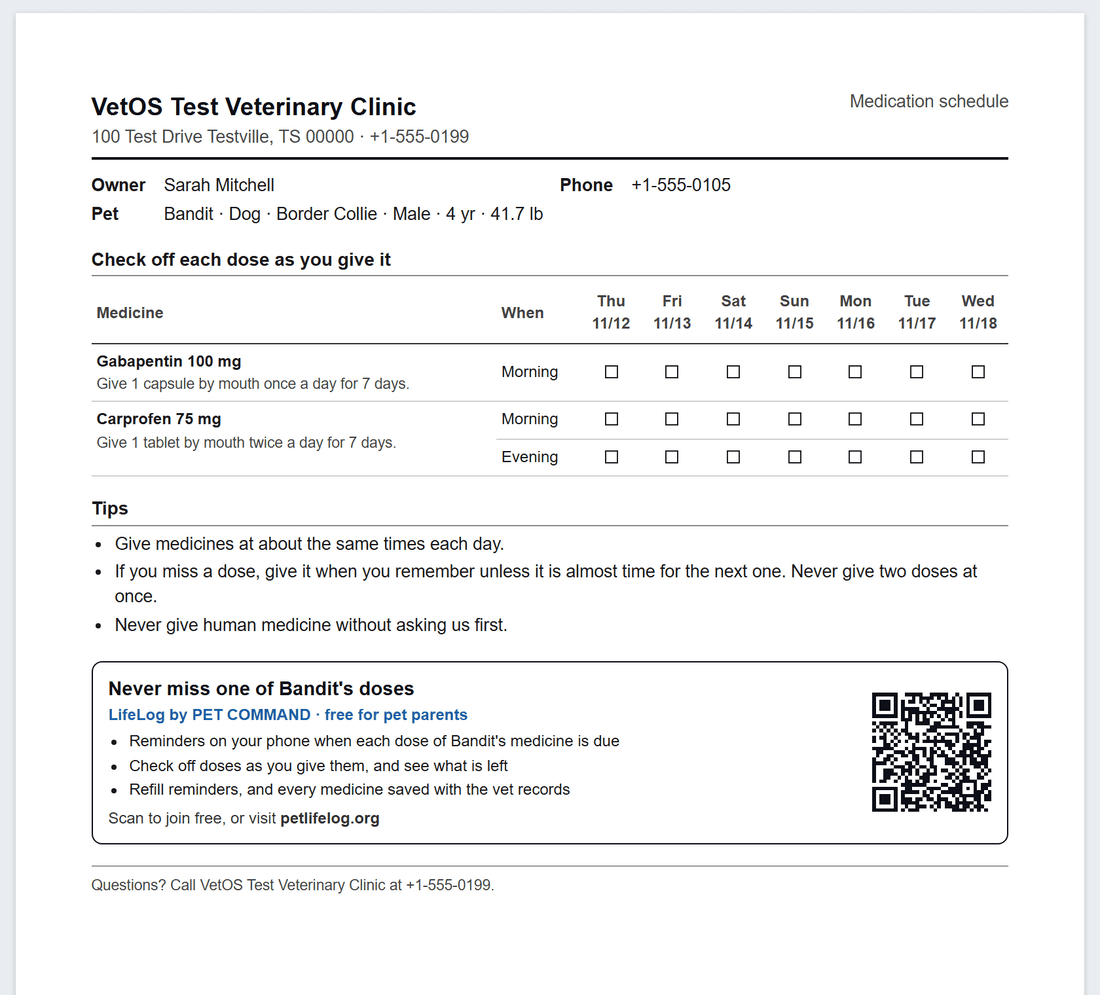
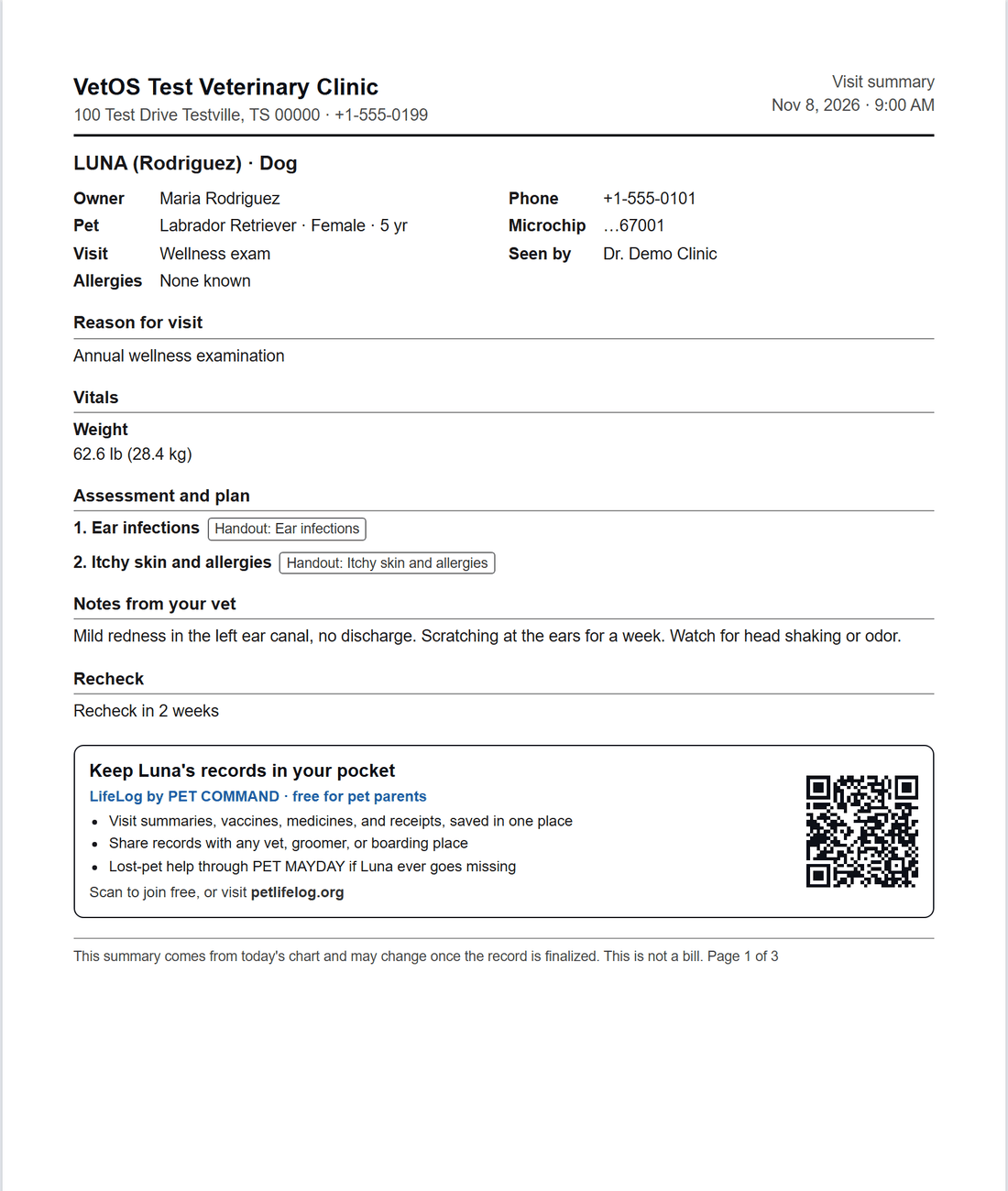
The medication schedule lists each medicine with a box to tick for every dose this week. The visit summary explains the visit in plain words, with a handout for each problem found.
Both come from what the team already entered in the chart, so nobody retypes the visit. Print them, or save them as a PDF to send.
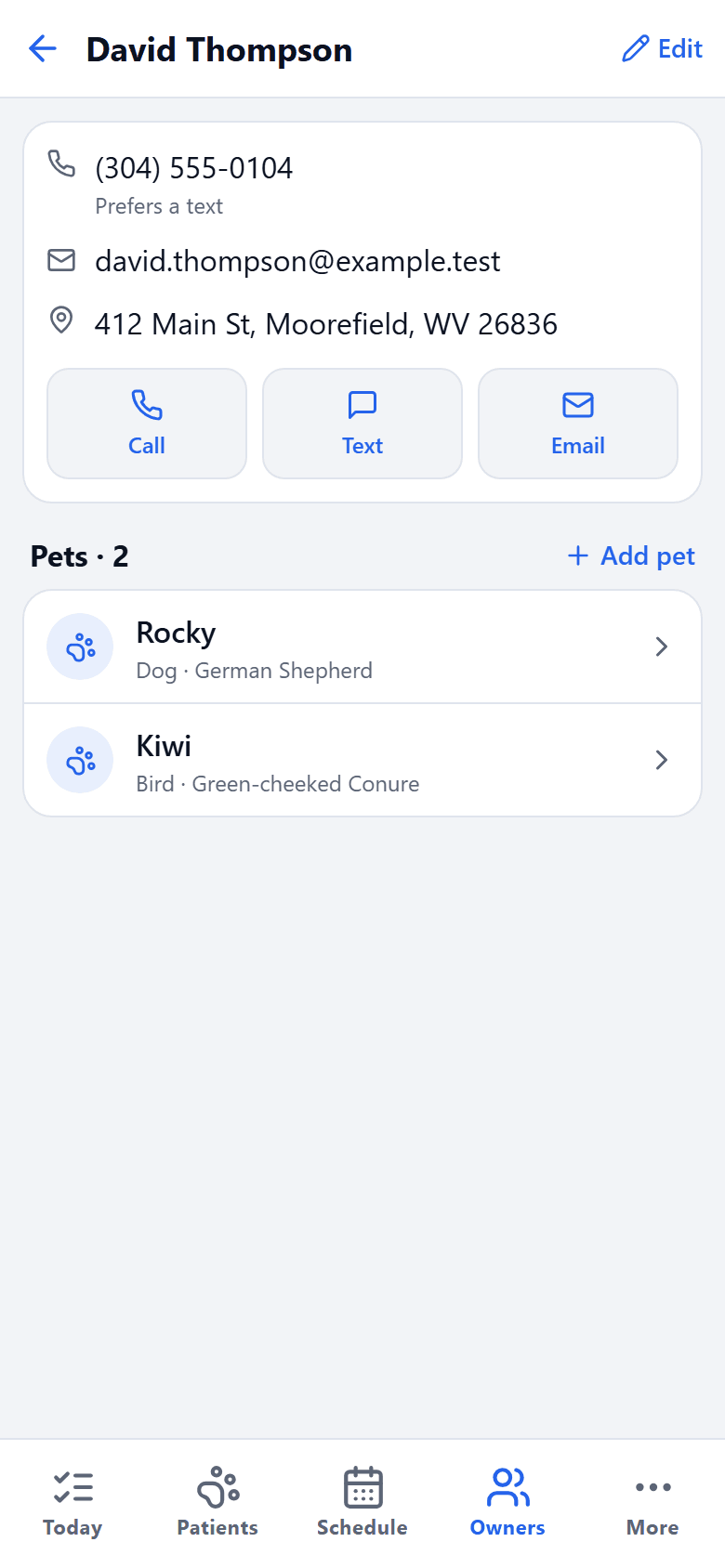
Reach each owner the way they prefer.
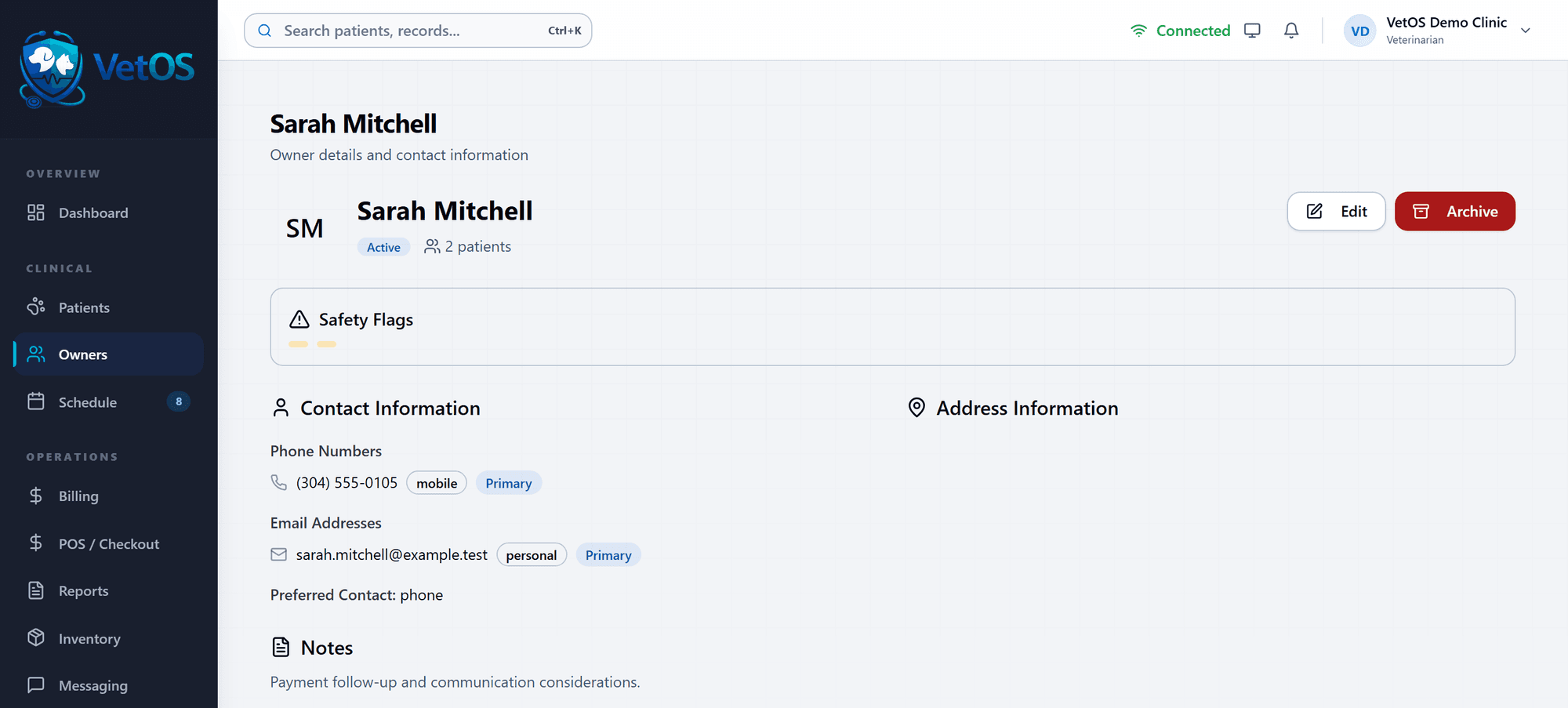
Every owner record keeps their phone numbers, email addresses and how they like to be contacted, with their pets listed underneath.
Notes and safety flags sit on the same record, so whoever picks up the phone knows what to keep in mind.
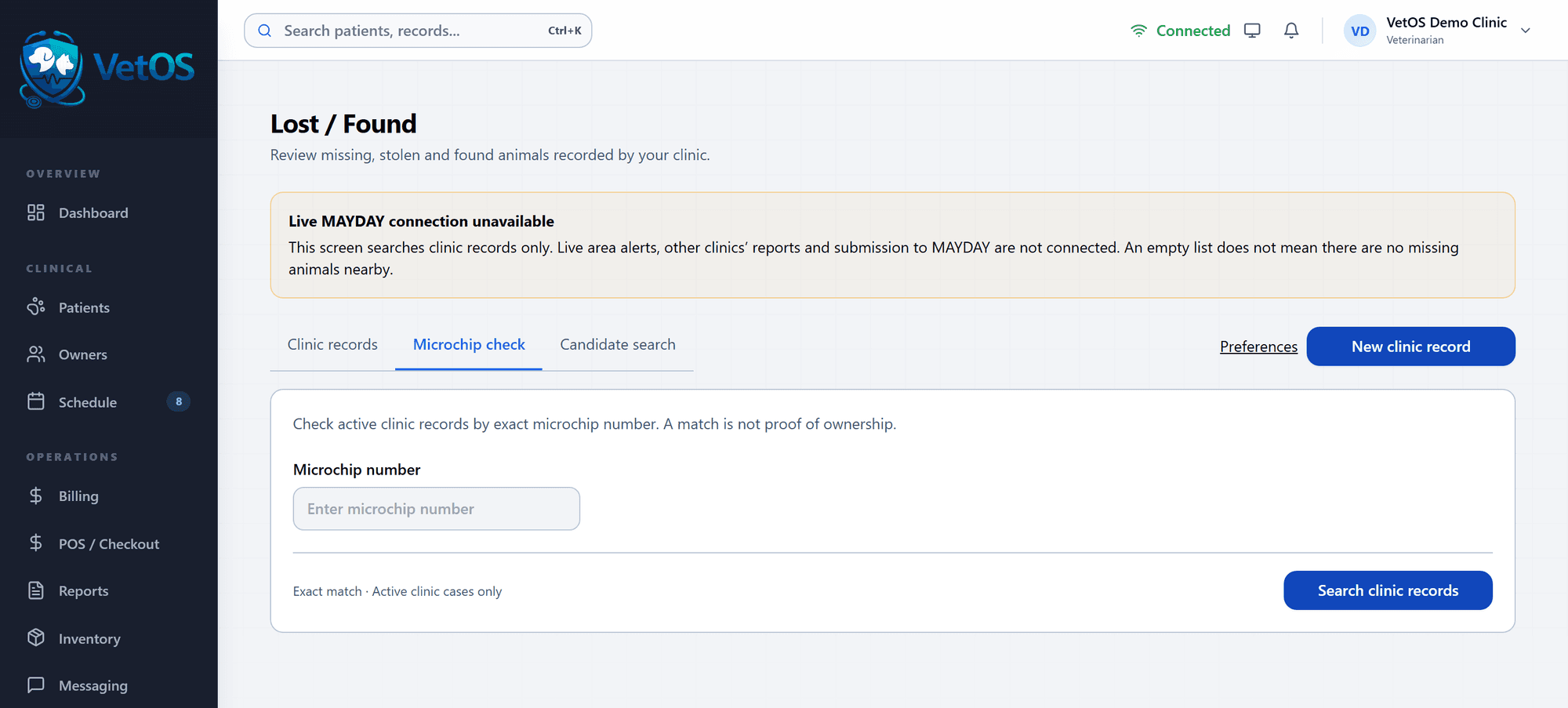
A lost pet comes in. Check the microchip.
Lost and found keeps your clinic’s reports of missing, stolen and found animals. Enter a microchip number to see whether it matches one of them.
It searches your own clinic’s records only. It does not yet reach other clinics or Pet MAYDAY, and a match is a lead, not proof of ownership. The screen says so.
Records that go home with the pet.
Printed visit summaries and medication schedules carry an invitation to LifeLog, the free pet record app from PET COMMAND. Owners who join can keep vaccines, medicines and visit notes in one place and share them with a sitter, groomer or boarding kennel.
LifeLog is optional for owners and free. The invitation is never printed on forms about a pet’s death.
Estimates owners can plan around.
Estimates show a low and a high cost for each service, so owners see an honest range before work starts. Printed, it goes home with them to think over, and you record their approval when they say yes.
See it with your own clinic in mind.
Tell us about your practice, whatever its size, and we’ll walk you through VetOS on a call.
Ask for a walkthrough